

Real estate agencies don’t need more software. They need work that moves without constant manual coordination.
Across the industry, agencies have invested heavily in systems designed to improve visibility and control, including CRMs, property management platforms, reporting tools and workflow software. Each has solved a specific part of the problem. But the day-to-day reality of operations has remained largely unchanged. Work is still held together by manual coordination: inbox follow-ups, lease administration, reporting cycles, tenant communication and the ongoing effort required to keep information moving across disconnected systems.
The issue is not a lack of tools. It is that operational work still depends on people acting as the connector between them.
At the same time, there is a clear shift happening in how agencies think about operations. The focus is no longer just on adding more systems or improving visibility, but on reducing the amount of manual effort required to keep work flowing in the first place.
That gap between structured systems and the manual coordination still required to make them work is what led to the creation of the Homi AI.
Introducing Homi AI
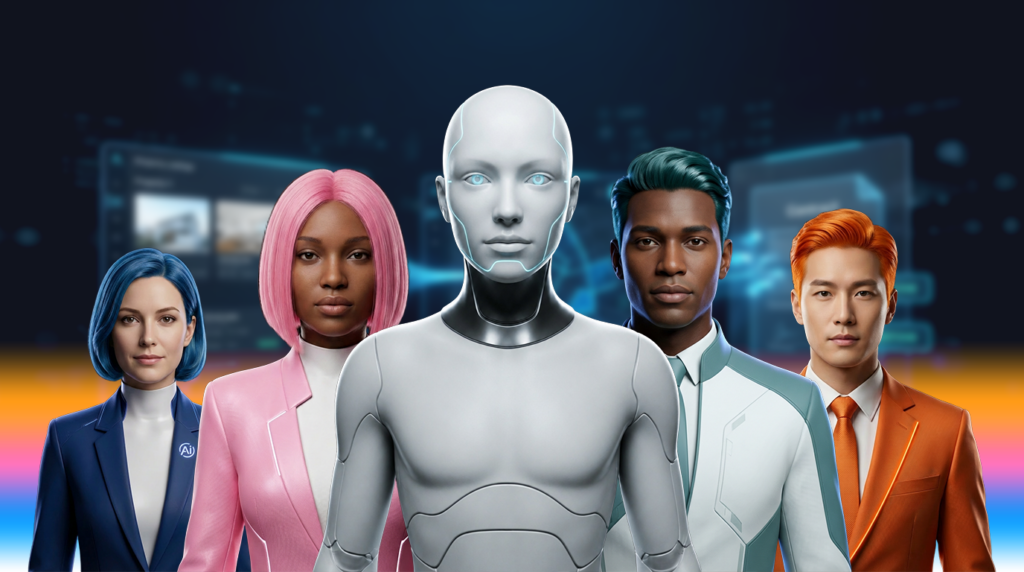
Homi AI (formerly known as Academy of AI for Real Estate) introduces AI teammates designed specifically for real estate operations.
These are not standalone tools, dashboards or interfaces that require teams to adopt new ways of working. They are operational agents that sit inside the systems agencies already use, designed to take on the repetitive, structured work that typically slows teams down.
From the outset, the design constraint was not to add more capability. It was to remove the need for constant coordination.
To do that, AI teammates needed to work within existing systems, follow real operational workflows, and execute tasks reliably from start to finish, not just assist with parts of them.
AAIRE was built around that structure.
AI teammates inside real operational workflows
Homi agents are designed around how real estate work actually moves.
They operate across core areas such as enquiries and leasing, property management and maintenance, reporting and compliance, marketing and communications and day-to-day sales and administrative operations.
Instead of requiring work to be manually assigned or tracked, agents are triggered by real operational events such as incoming emails, system updates, scheduled conditions or workflow rules. From there, they carry work forward through defined processes until completion.
In practice, this changes how work progresses through an agency. Tasks no longer depend on manual handovers between systems or teams before moving forward. They move as soon as the system receives the input that initiates them. And because these workflows aren’t tied to business hours, work continues beyond the day — after hours, overnight and across the gaps where things would normally pause. Nothing sits waiting for the next business day.
It’s like having a reliable teammate keeping things moving, even when your team is offline.
From input to action, automatically
When an operational event occurs — an enquiry, a tenant message, a maintenance request or a scheduled update — AI agents developed by Homi move it through to completion.
They interpret the input, extract what matters, determine the required action and execute it within the systems already in use.
An enquiry is categorised and responded to. A follow-up is triggered based on workflow rules. Lease information is updated across systems. Invoices are extracted, processed and logged. Reports are continuously updated as new data flows in. (Explore more AI agent use cases)
A simple workflow might look like this:
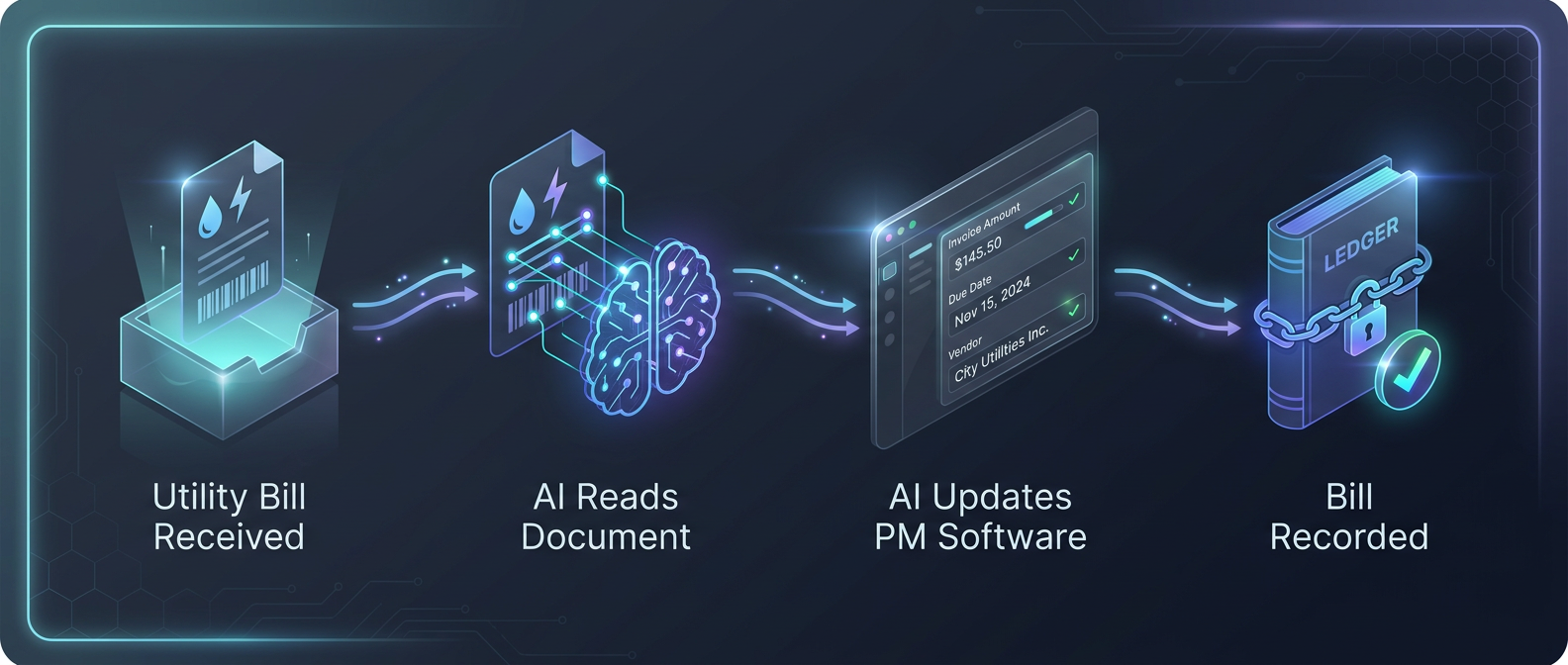
The intention is not to introduce another layer of oversight or decision-making. It is to reduce the need for coordination altogether, so work progresses without being repeatedly moved forward by manual effort.
What changes in practice
The shift is subtle, but significant. Instead of teams constantly managing the flow of work, the system begins to maintain that flow on its own.
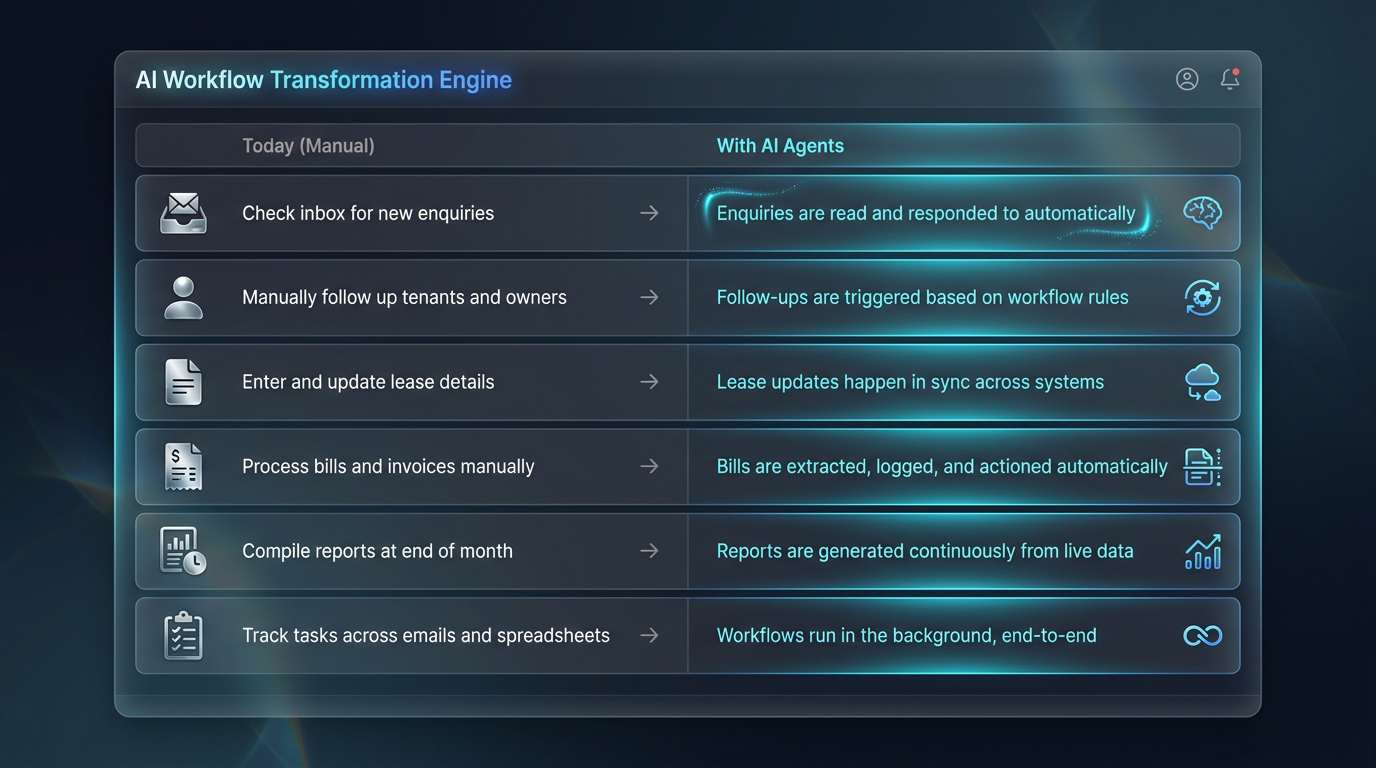
Work doesn’t disappear, but it moves differently. Faster, more consistently, and without relying on constant manual input.
Built around how agencies actually work
Homi is not offering a plug-and-play product.
Each implementation is designed around how a specific agency already operates — their systems, internal processes, approval structures and workflows. The starting point is always the same: understanding how work currently moves through the business. From there, AI teammates are configured to reflect that structure, not replace it. This matters because real estate operations are not uniform. Even when agencies use similar tools, the way work is executed and decisions are made varies significantly across teams.
For AI to be reliable in this environment, it has to adapt to those differences rather than override them.
“The goal is not to change how agencies work. It is to reduce the operational effort required to maintain how they already work.
“We didn’t build Homi to introduce another tool for agencies to manage,” said Ben Skeggs, CEO of Homi. “We built it to close the gap between structured systems and the manual coordination still required to make them work in practice. When AI is embedded into how work already flows, the impact is immediate, not because it adds more capability, but because it removes friction from execution.”
As we continue working with agencies, a pattern is becoming increasingly clear. The future of real estate operations will not be defined by more tools, dashboards or reporting layers. It will be defined by systems that understand how work moves — and can reliably carry parts of that work without requiring manual coordination.
Homi is built around that shift.